The Problem
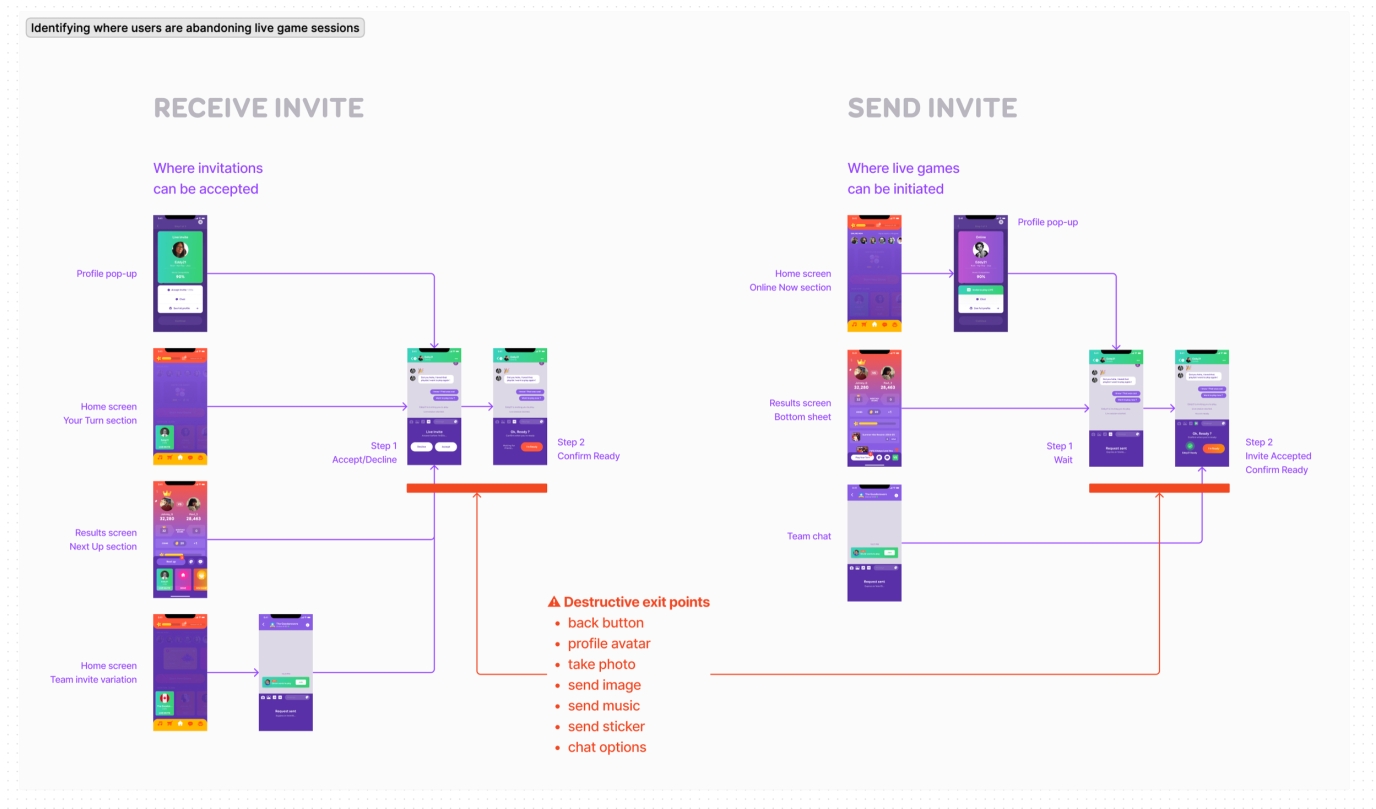
SongPop’s Live PVP mode, where users compete head-to-head at music trivial in real time, had very high rates of time-outs and cancellations. There were far more games started than the number actually played. Players couldn’t tell if their invitations were working, and it was too easy to wander away from the Live PVP screen and miss the start of the game when your opponent accepted the invite. As a result, lots of people were killing the app, thinking it was frozen. We also received a lot of feedback that the feature was broken.
The Solution
To solve this I redesigned the entry and exit points, introducing a Live PVP lobby that
- improved the display of the connection status
- gave the user more autonomy to continue playing or end the session
- reshuffled the order of interactions on the front-end without any back-end changes
This new lobby kept players locked in one place and told them exactly what was happening at every step. Players now had the option to send stickers or canned chat phrases while they waited, and after each round everyone returned to the lobby to either play another round or wrap things up. There was only one destructive action remaining: ending the Live PVP session.
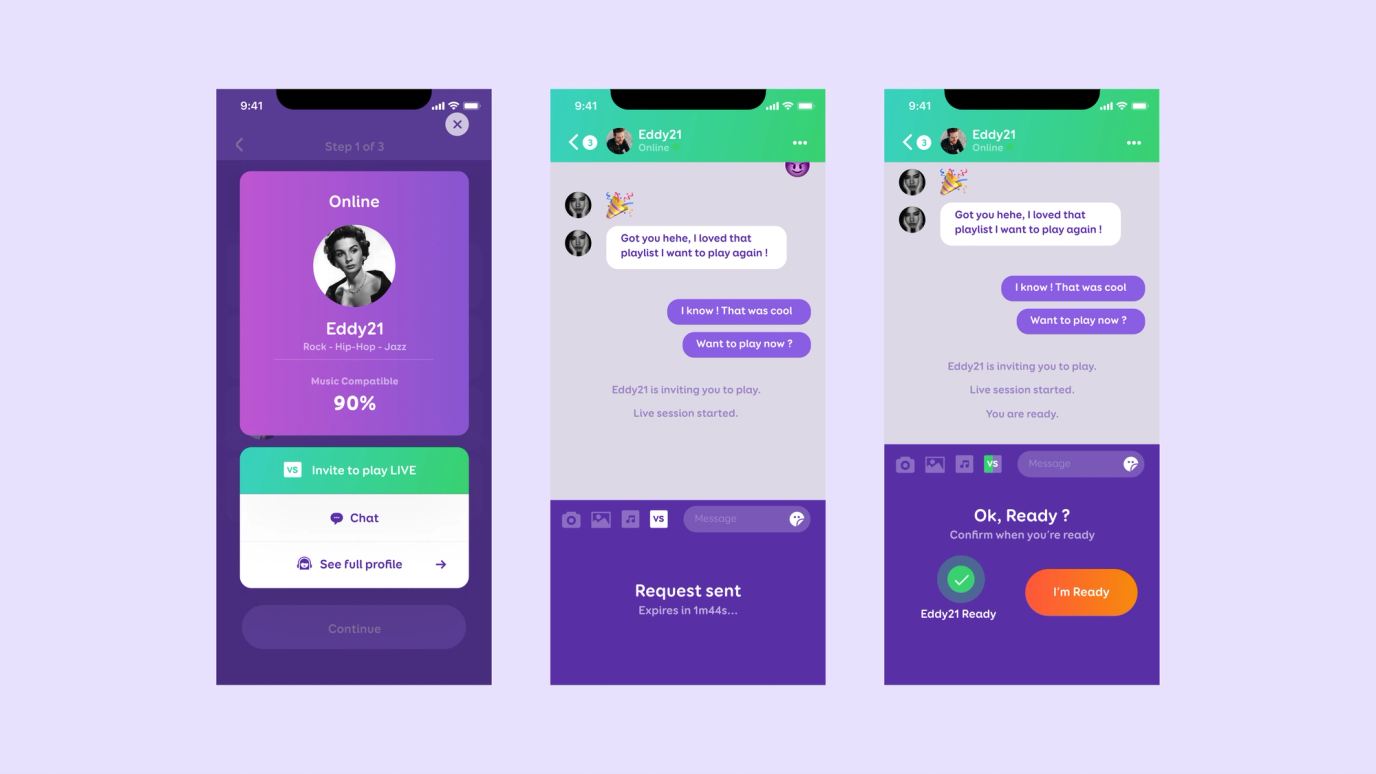
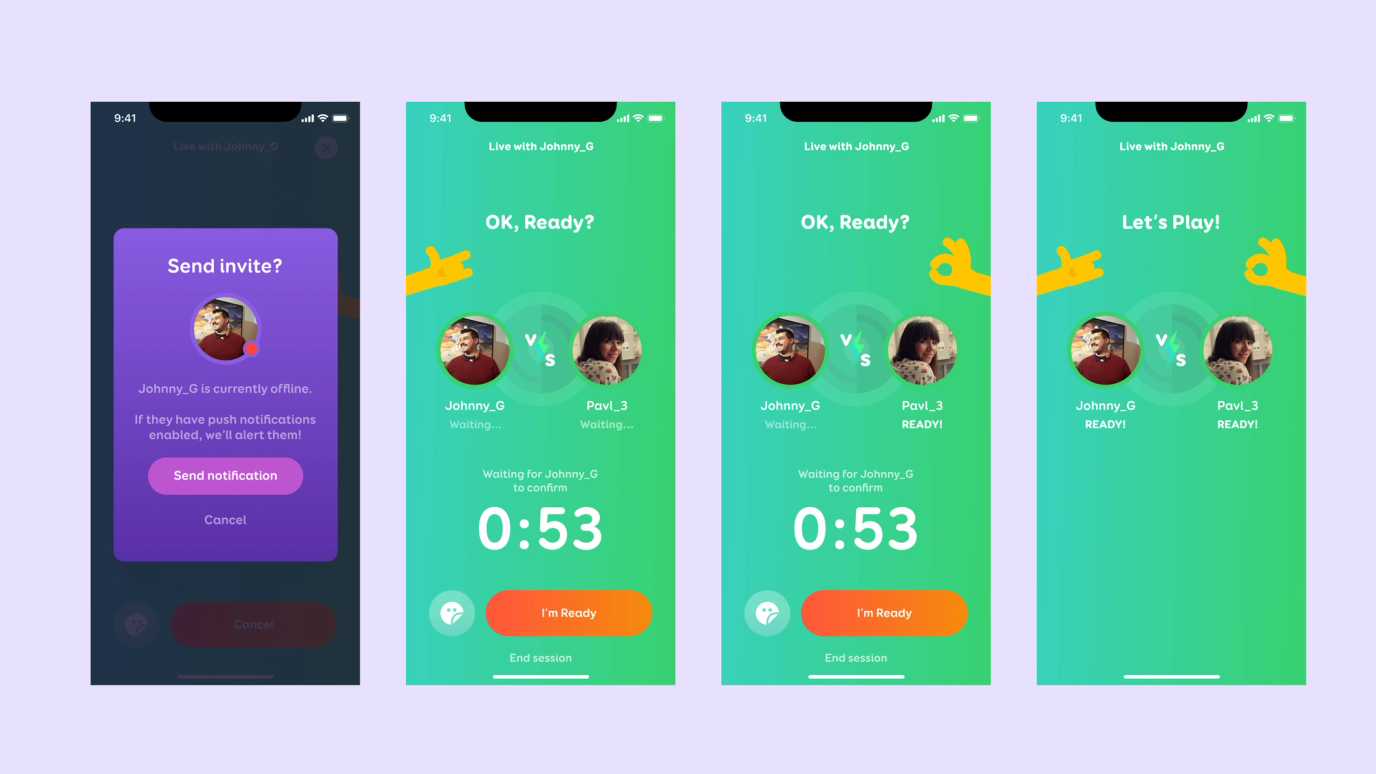
All the changes centered around Jakob Nielsen’s first heuristic for user interface design, visibility of system status:
“The design should always keep users informed about what is going on, through appropriate feedback within a reasonable amount of time.”
By limiting the interactions in a lobby waiting area, I removed any possible actions that would have unwanted consequences. I also added a few more automated messages to act as a record of what happened. With the new ability to end the session, I could provide a sense of closure and trust to the player.
Results
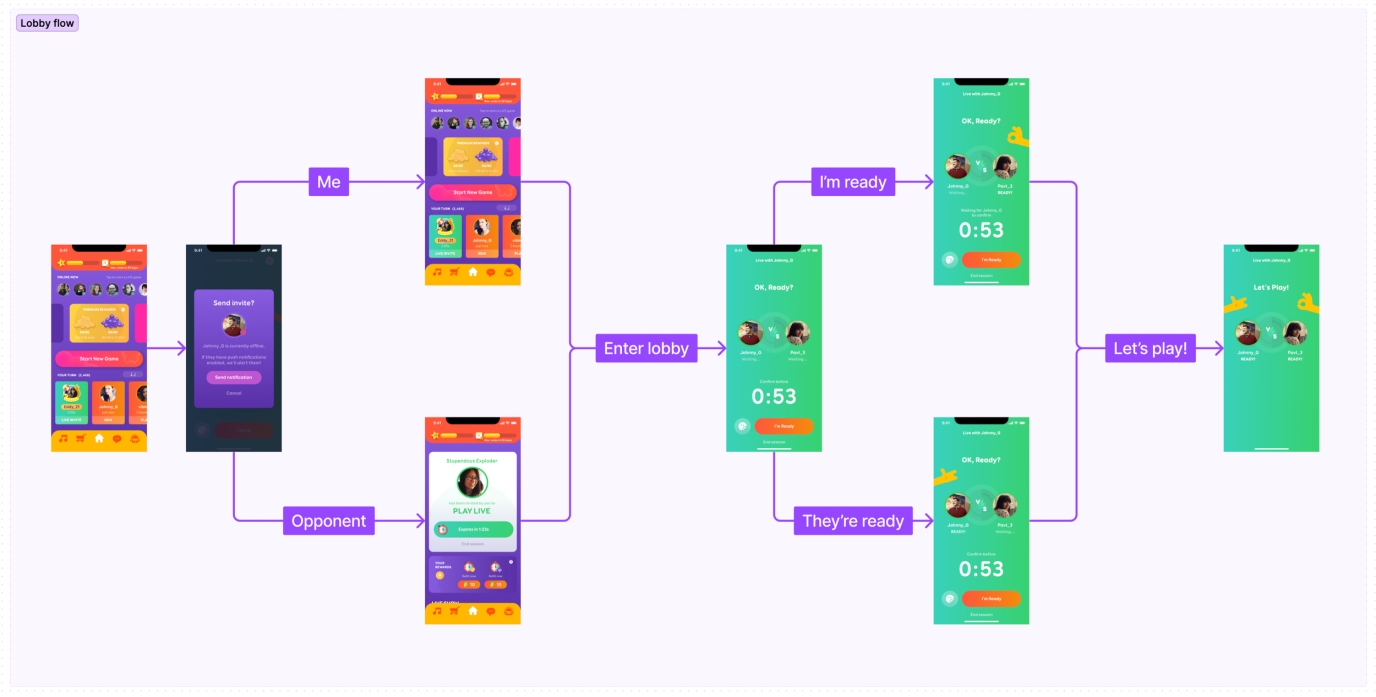
In the end, with less freedom to wander around the app, the feature became much more usable. We observed a significant drop in the number of cancelled games, fewer customer support complaints, and a lot of positive feedback from our Facebook fan groups about the improvements.